



 RETURN TO BLOG LISTINGS
Biometric authentication has become a cornerstone in modern access control, helping organizations reduce reliance on cards that can be lost, stolen, or shared, and PINs or passwords that can be disclosed. However, as biometric technologies become more widely adopted, attackers are also developing increasingly sophisticated methods to deceive biometric systems. This is why anti-spoofing technology is an important layer of protection.
The Growing Threat of Biometric Spoofing
Accurate biometric matching alone is not enough: a system also needs protection against attempts to present a fake biometric sample.
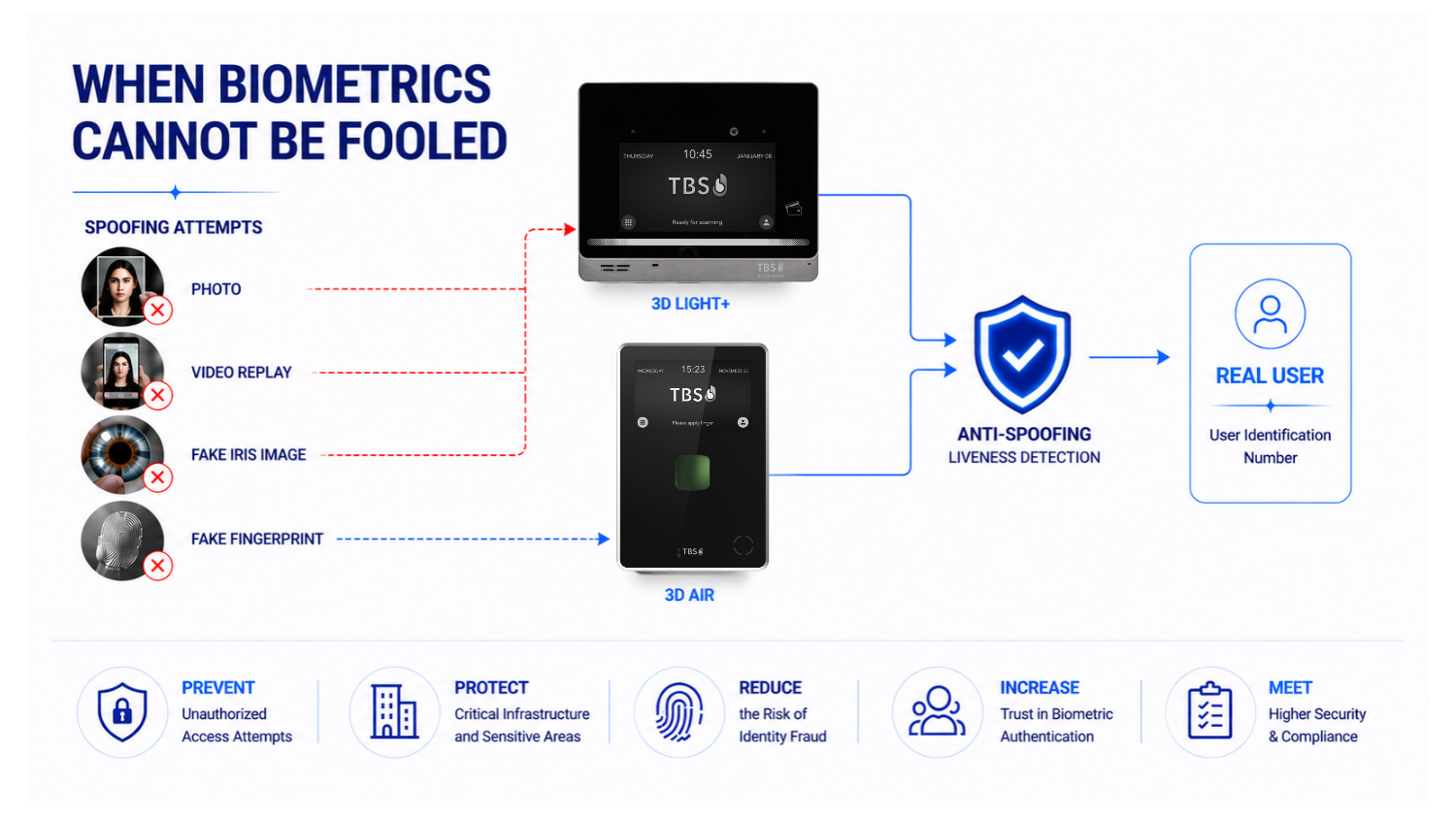
Attackers may attempt to gain unauthorized access using printed photographs, video replays, artificial fingerprints, or fake iris images.
What is Anti-Spoofing Technology?
Biometric anti-spoofing helps detect attempts to deceive a biometric reader using a fake or manipulated biometric sample. Presentation attack detection (PAD) addresses such attacks at the point of capture. Liveness detection is one approach within PAD, assessing characteristics that indicate a living person is present.
Rather than simply matching a face, fingerprint, or iris against a stored template, the system also evaluates the captured sample for signs of a presentation attack.
This additional security layer helps reduce the risk of unauthorized access.
Biometric matching and PAD serve different purposes: matching checks whether a sample corresponds to an enrolled person, while PAD checks for signs of an attack. The biometric reader then determines whether a presented biometric sample is truly from a living person.
How TBS helps protect against Spoofing Attacks
At TBS, anti-spoofing technology is an integral part of our biometric solutions. Our readers are designed to combine accurate biometric matching with presentation attack detection, supporting secure and convenient authentication.
For facial recognition, TBS solutions leverage advanced imaging technologies to distinguish real users from photographs or screen-based attacks.
For iris recognition, the TBS readers utilize advanced verification techniques to ensure that only genuine users are granted access.
By integrating anti-spoofing directly into the authentication process, TBS helps organizations strengthen identity assurance without compromising user experience.
Why Anti-Spoofing Matters
Modern organizations face the challenge of protecting sensitive areas while providing fast and convenient access for employees and visitors.
Effective anti-spoofing technology helps organizations:
- Prevent unauthorized access attempts
- Protect critical infrastructure and sensitive areas
- Reduce the risk of identity fraud
- Increase trust in biometric authentication
- Meet higher security and compliance requirements
Secure Access starts with Trusted Biometrics
Contact TBS to discuss the biometric technology and security features best suited to your access control requirements.